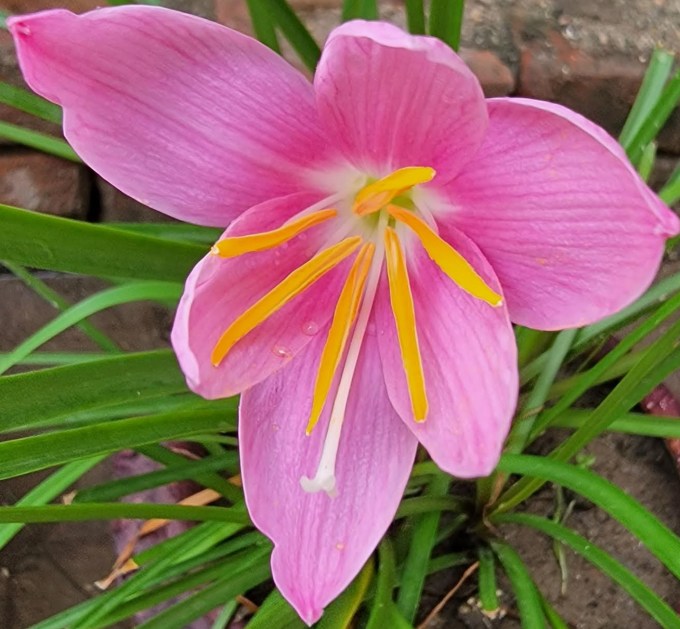
Priming is an adaptive strategy that enhances defensive capacity of plants to respond faster and/or stronger against the biotic and abiotic stress. This phenomenon is marked by induced resistance. Stimuli from pathogens/ beneficial microbes/ herbivores/ chemicals, can trigger the establishment of priming by acting as warning signal (Mauch-Mani et al., 2017; Bagheri and Fathipour 2021). Priming initiates a state of readiness that does not confer resistance but permit accelerated induced resistance as soon as the invasion takes place. The process of priming is by which a biotic or abiotic stress modifies plant response to a future challenge (Ramirez-Prado et al., 2018). The readiness executed by means of priming is termed as “primed state” (Conrath et al., 2015).
Priming is an intrinsic part of induced resistance (Mauch-Mani et al., 2017). Induced resistance general mechanisms are direct activation of defense response in systemic tissue after local stimuli and priming (Aranega-Bou et al., 2014, De Kesel et al., 2021). Plant innate immune system recognize and respond to pathogens. Immune recognition of pathogen-associated molecular patterns or effector leads to defense activation at pathogen challenged site (Jones and Dangl 2006; Espinas et al., 2016). Followed by systemic defense activation at distant healthy sites termed systemic acquired resistance (SAR). These inducible defenses are accompanied by transcriptional reprogramming of defense related genes (Espinas et al., 2016).
Salicylic acid (SA) accumulation and coordinated activation of PR gene is required for SAR establishment preventing spread of plant pathogen (Van Loon and Van Strien 1999; Dong 2004). In response to endogenous accumulation of SA, the defense regulatory protein NPR1 (Nonexpresser of Pathogenesis-related Genes1) moves to the nucleus where it interacts with TGA (TGACG-binding) transcription factors to induce defense gene expression thus activating SAR (Dong 2004). Application of methyl jasmonate induces resistance against necrotrophic pathogen, while SA conferred resistance against biotrophic pathogen (Oliveira et al., 2015; Hu et al., 2018). Rhizoctonia solani exhibited distinct preference for unprimed plants by growing directly towards the leaves. This indicates fungus can detect an unprimed host (Koley et al., 2021).
SAR is induced after pathogen attack or by exogenous application of SA or its synthetic analogs (Kohler et al., 2002). Plant defense priming can be activated by chemical compound such as b-aminobutyric acid, salicylic acid, jasmonic acid, hexanoic acid, pipecolic acid, chitosan, and volatile organic compounds (Conarth et al., 2002; Conrath et al., 2015; Llorens et al., 2016; Zhou and Wang 2018; Tiwari et al., 2022). The chemical changes in wounded leaf may act as wound signal to undamaged region within plant or to neighboring plants. The recognition of these signals may initiate priming, which comprises changes at the molecular levels and lead to a so-called primed state in undamaged leaves (Frost et al., 2008). The non-SA SAR pathway is driven by pipecolic acid or its presumed bioactive derivative N-hydroxy-pipecolic acid (Vlot et al., 2020). Soil drench application of hexanoic acid compound remains in roots, provoking molecular changes that may trigger the defensive response in the rest of the plant mediated by the changes in the mevalonic and linolenic pathways and enhancing the emission of volatile compounds suggesting the involvement of mevalonic pathway in response to hexanoic application (Llorens et al., 2016).
Plant immunity involves regulation by chromatin remodeling and DNA methylation (Luna et al., 2012). Plant Molecular studies on defense priming recorded altered chromatin structure through a variety of post translational modification of histone proteins and histone modification is associated with priming memory in plants (Buzas 2017; Lamke and Baurle 2017).
Epigenetic phenomenon: A stable and heritable (through cell division) change in gene expression which is independent of DNA sequence changes and is, in principle reversible (Lamke and Baurle 2017).
Epigenetic modification: Describes a change in nucleosome structure caused by histone modification, histone variants or modification (methylation) of the DNA (Lamke and Baurle 2017).
Past studies reveal defense priming can pass down generation, indicating an epigenetic component of transgenerational defense priming (Luna et al., 2012; Martinez-Medina et al., 2016).Host resistance increase towards pathogen through phytohormone priming (Bawa et al., 2019). Priming provides enhanced disease protection at low cost to the plant.
Reference:
Aranega-Bou, P., de la O Leyva, M., Finti, I., Garcia-Agustin, P. and Gonzalez-Bosch, C. 2014 Priming of Plant Resistance by Natural Compounds. Hexanoic Acid as a Model. Front. Plant Sci. 5: 488
doi: 10.3389/fpls.2014.00488
Bagheri, A. and Fathipour, Y. 2021 Induced Resistance and Primings. In: “Molecular Approaches for Sustainable Insect Pest Management”. Publisher Springer. Edition: 1, Chapter: 3 pp: 73 – 139
doi: 10.1007/978-981-16-3591-5_3
Bawa, G., Feng, L., Yan, L., Du, Y., Shang, J., Sun, X., Wang, X., Yu, L., Liu, C., Yang, W. and Du, J. 2019 Pre-treatment of Salicylic Acid Enhances Resistance of Soybean Seedlings to Fusarium solani. Plant Mol. Biol. 101(3): 315 – 323
doi: 10.1007/s11103-019-00906-x
Buzas, D. M. 2017 Capturing Environmental Plant Memories in DNA with a Little Help from Chromatin. Plant Cell Physiol. 58(8): 1302-1312
doi: 10.1093/pcp/pcx092
Conrath, U., Beckers, G. J. M., Langenbach, C. J. G. and Jaskiewicz, M. R. 2015 Priming for Enhanced Defense. Annu. Rev. Phytopathol. 53: 97 – 119
doi: 10.1146/annurev-phyto-080614-120132
Conarth, U., Pieterse, C. M. J. and Mauch-Mani, B. 2002 Priming in Plant-Pathogen Interaction. Trends Plant Sci. 7(5): 210 – 216
doi.org/10.1016/S1360-1385(02)02244-6
De Kesel, J., Conrath, U., Flors, V., Pieterse, C. M. J., Ton, J. and Kyndt, T. 2021 The Induced Resistance Lexicon: Do’s and Don’ts. Trends Plant Sci. 26(7): 685 – 691
doi.org/10.1016/j.tplants.2021.01.001
Dong, X. 2004 NPR1 All Things Considered. Curr. Opin Plant Biol. 7(5): 547 – 552
doi.org/10.1016/j.pbi.2004.07.005
Espinas, N. A., Saze, H. and Saijo, Y. 2016 Epigenetic Control of Defense Signaling and Priming in Plants. Front. Plant Sci. 7: 1201
doi: 10.3389/fpls.2016.01201
Frost, C. J., Mescher, M. C., Carlson, J. E. and De Moraes, C. M. 2008 Plant Defense Priming against Herbivores: Getting Ready for a Different Battle. Plant Physiol. 146(3): 818 – 824
doi: 10.1104/pp.107.113027
Hu, Z., Shao, S., Zheng, C., Sun, Z., Shi, J., Yu, J., Qi, Z. and Shi, K. 2018 Induction of Systemic Resistance in Tomato against Botrytis cinerea by N-decanoyl-homoserine Lactone via Jasmonic Acid Signaling. Planta 247(5): 1217 – 1227
doi: 10.1007/s00425-018-2860-7
Jones, J. D. G. and Dangl, J. L. 2006 The Plant Immune System. Nature 444(7117): 323 – 329
doi: 10.1038/nature05286
Kohler, A., Schwindling, S. and Conrath, U. 2002 Benzothiadiazole-Induced Priming for Potentiated Responses to Pathogen Infection, Wounding and Infiltration of Water into Leaves Requires the NPR1/NIM1 Gene in Arabidopsis. Plant Physiol. 128(3): 1046 – 1056
doi: 10.1104/pp.010744
Koley, P., Brahmchari, S., Saha, A., Deb, C., Mondal, M., Das, N., Das, A., Lahiri, S., Das, M., Thakur, M. and Kundu, S. 2021 Phytohormone Priming of Tomato Plants Evoke Differential Behavior in Rhizoctonia solani during Infection with Salicylate Priming Imparting Greater Tolerance than Jasmonate. Front. Plant Sci. 12: 766095
doi: 10.3389/fpls.2021.766095
Lamke, J. and Baurle, I. 2017 Epigenetic and Chromatin-based Mechanisms in Environmental Stress Adaptation and Stress Memory in Plants. Genome Biol. 18: 124
doi: 10.1186/s13059-017-1263-6
Llorens, E., Camanes, G., Lapena, L. and Garcia-Agustin, P. 2016 Priming by Hexanoic Acid Induce Activation of Mevalonic and Linolenic Pathways and Promotes the Emission of Plant Volatiles. Front. Plant Sci. 7: 495
doi: 10.3389/fpls.2016.00495
Luna, E., Bruce, T. J. A., Roberts, M. R., Flors, V. and Ton, J. 2012 Next-Generation Systemic Acquired Resistance. Plant Physoil. 158(2): 844 – 853
doi: 10.1104/pp.111.187468
Martinez-Medina, A., Flors, V., Heil, M., Mauch-Mani, B., Pieterse, C. M. J., Pozo, M. J., Ton, J., Van Dam, N. M. and Conrath, U. 2016 Recognizing Plant Defense Priming. Trends Plant Sci. 21(10): 818 – 822
doi.org/10.1016/j.tplants.2016.07.009
Mauch-Mani, B., Baccelli, I., Luna, E. and Flors, V. 2017 Defense Priming: An Adaptive Part of Induced Resistance. Annu. Rev. Plant Biol. 68: 485 – 512
doi.org/10.1146/annurev-arplant-042916-041132
Oliveira, M. B., Junior, M. L., Grossi-de-Sa, M. F. and Petrofeza, S. 2015 Exogenous Application of Methyl Jasmonate Induces a Defense Response and Resistance against Sclerotinia sclerotiorum in Dry Bean Plants. J Plant Physiol. 182: 13 – 22
doi: 10.1016/j.jplph.2015.04.006
Pieterse, C. M. J., Van Wees, S. C. M., Van Pelt, J. A., Knoester, M., Laan, R., Gerrits, H., Weisbeek, P. J. and Van Loon L. C. 1998 A Novel Signaling Pathway Controlling Induced Systemic Resistance in Arabidopsis. The Plant Cell 10(9): 1571 – 1580
doi.org/10.1105/tpc.10.9.1571
Ramirez-Prado, J. S., Abulfaraj, A. A., Rayapuram, N., Benhamed, M. and Hirt, H. 2018 Plant Immunity: From Signaling to Epigenetic Control of Defense. Trends Plant Sci. 23(9): 833 – 844
doi.org/10.1016/j.tplants.2018.06.004
Tewari, M., Pati, D., Mohapatra, R., Sahu, B. B. and Singh, P. 2022 The Impact of Microbes in Plant Immunity and Priming Induced Inheritance: A Sustainable Approach for Crop Protection. Plant Stress 4: 100072
doi.org/10.1016/j.stress.2022.100072
Van Loon, L. C. and Van Strien, E. A. 1999 The Families of Pathogenesis-Related Proteins their Activities and Comparative Analysis of PR-1 Type Proteins. PMPP 55(2): 85 – 97
doi.org/10.1006/pmpp.1999.0213
Vlot, A. C., Sales, J. H., Lenk, M., Bauer, K., Brambilla, A., Sommer, A., Chen, Y., Wenig, M. and Nayem, S. 2020 Systemic Propagation of Immunity in Plants. New Phytologist 229(3): 1234 – 1250
doi.org/10.1111/nph.16953
Zhou, M. and Wang, W. 2018 Recent Advances in Synthetic Chemical Inducers of Plant Immunity. Front. Plant Sci. 9: 1613
doi: 10.3389/fpls.2018.01613



 BIOLOGICAL PROCESSES- A NATURE'S GIFT